Best Practices for Embedded System Services in Medical Device Development
Discover best practices for embedded system services in medical device development to...


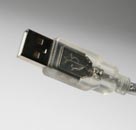
The original IBM PC included RS-232 serial ports, helping to proliferate a data transfer format that has lasted for decades. Thousands of industrial devices, everything from flow meters to other types of laboratory instruments, traditionally have RS-232 as the standard input/output port. In 2004, most of the new PCs stopped shipping with an RS-232 serial interface as a part of their standard or base configuration. Common PC desktop peripherals such as printers, scanners, and fax machines are currently made with USB ports.
USB Port
The Universal Serial Bus, or USB, is an external port that interfaces between external devices and a computer. The original IBM personal computers had an RS-232 port that connected external devices like a keyboard or mouse.Today, USB ports are replacing RS-232 ports. One may plug most anything into a USB port. This includes keyboards, cameras, mice, joysticks,modems, zip drives, floppy drives, printers, and scanners.
USB offers three key advantages to peripheral manufacturers:
In the last few years serial ports have almost disappeared from PCs, and USB ports have replaced them. There are thousands of industrial devices that have serial ports, and this change is causing problems. Fortunately you may buy an inexpensive adapter that allows you to connect a USB port to a serial device. These devices work well, however they are only a stopgap measure.
USB allows data to travel on the average of ten times the speed of the normal parallel port. It is also faster than a serial port. The average serial port transfer rate is 150 kbps; the USB port is up to 12 Mbps. USB 2 is forty times faster, with a maximum transfer rate of 480 Mbps. It is backwardly compatible with USB 1. That means that if a new computer comes with USB 2, the older USB devices may still be used. Of course, they will perform at USB 1 speeds, but they will still work properly.
USB ports are more robust than serial ports. Serial ports are NOT robust, the tiny little pins are very easy to bend or break. On the other hand, USB ports are very rugged.

Do you have a question about our services, pricing, samples, resources, or anything else?
